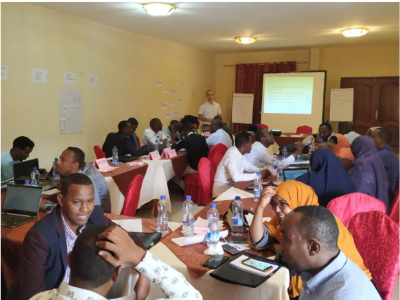

Cover image: © UNICEF/UN
To support impactful programming and ensure that coordination activities are grounded in operational realities, it is important to ensure strong collaboration between central coordination structures and sub-national coordination structures. The nutrition cluster coordination team has a key role to play in supporting and facilitating these relationships to achieve a coherent and effective nutrition response.
Learning objectives
By the end of this module, you will be able to:
- Discuss how and when sub-national coordination mechanisms are established
- Explain the types of communication and reporting lines that may exist between central and sub-national coordination structures in an emergency
- Describe how sub-national cluster structures may contribute to the planning and delivery of the humanitarian response through the humanitarian programme cycle (HPC)
- Discuss the opportunities presented by area-based coordination
Audience
This module is an introductory-level course aimed at anyone who is interested in developing skills and knowledge in nutrition cluster coordination in humanitarian contexts, and who needs to engage with humanitarian architecture on this topic. It is part of the recommended learning path for sub-national nutrition cluster coordinators aiming to progress to national-level roles.
Length
It should take you about 25 minutes to complete this self-paced course.
Methodology
This course is composed of a single short self-paced animated module, including various examples and activities.
Structure
Introduction
Lesson 1: Establishment of sub-national nutrition cluster
7 mins
Lesson 2: Links between central and sub-national coordination structures
3 mins
Lesson 3: Role of sub-national clusters in the humanitarian response
5 mins
Lesson 4: Providing support for sub-national clusters
5 mins
Lesson 5: Area-based coordination
5 mins
Summary
Contact details
For technical issues, you can contact https://www.nutritioncluster.net/Ask_question