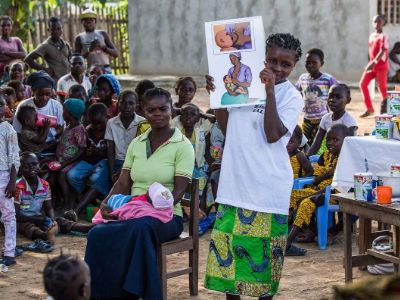

Cover image: © UNICEF/UN0
In addition to coordinating existing capacity-building activities, the nutrition cluster also has a key role in mapping capacity and developing a longer-term capacity-building strategy in collaboration with government partners. This can help to define key areas where capacity needs to be built as a collective, leverage different nutrition actors’ expertise, ensure coherence and impact of training, and avoid duplication. Specific tools exist to support the nutrition cluster coordination team and government actors in the development of a capacity-building strategy.
Learning objectives
By the end of this module, you will be able to:
- Recall the importance of collaborating with national authorities for developing capacity
- Explain how to implement a capacity mapping exercise
- Describe the key components of a capacity-building strategy
Audience
This module is an intermediary-level course aimed at anyone who is interested in furthering their skills and knowledge in nutrition cluster coordination in humanitarian contexts, and who needs to coordinate and collaborate with the humanitarian architecture on this topic. It is part of the recommended learning path for national nutrition cluster coordinators aiming to progress to senior level roles.
Length
It should take you about 35 minutes to complete this self-paced course.
Methodology
This course is composed of a single short self-paced animated module, including various examples and activities.
Structure
Introduction
Lesson 1: Developing a common capacity-building strategy with national and local actors
35 mins
Summary
Suggested prior learning
Coordinating capacity-building activities within the nutrition cluster
Contact details
For technical issues, you can contact https://www.nutritioncluster.net/Ask_question