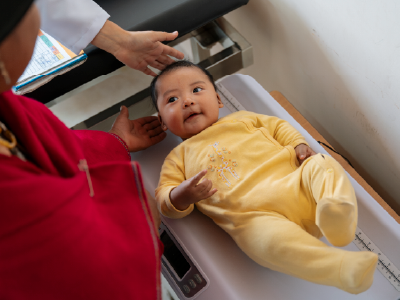

Course photo: © UNICEF/UNI944226/Arcos
This is a virtual course to strengthen the capacities of service providers, government institutions and actors interested in the prevention and reduction of chronic child malnutrition (DCI) through the development, implementation and monitoring of local communication plans for social and behavioral change. The course consists of five units, addressing in a complete and practical way the development of communication strategies for social and behavior change (CCSyC) for the prevention and reduction of DCI.
Learning Objectives
Train participants in the principles of communication for social and behavioural change and the formulation of local social and behavioural change plans for the prevention and reduction of DCI, providing a comprehensive understanding of the processes, approaches, tools and activities used to promote positive and measurable change in settings, societies and individuals. Throughout the course, the acquisition of skills in the application of social and behavioral evidence, as well as inclusive and participatory approaches for the prevention and reduction of DCI, under the UNICEF CCSyC model, will be encouraged.
At the end of the course, participants will be able to:
- Understand the concepts and dimensions of communication for social and behavioural change.
- Identify behaviors (knowledge, attitudes and practices that integrate them), barriers and facilitators.
- Identify different models of social and behavioural change according to the level of the socio-ecological model and the behavioural model.
- Formulate and implement local plans for social and behavioural change aimed at preventing and reducing DCI.
Audience
- Community actors: community leaders and opinion leaders at the local level, representatives of drinking water management boards, midwives, men and women of wisdom, members of local health committees, mothers and fathers involved in the community;
- Local authorities: authorities of decentralized autonomous governments and candidates for political dignities;
- Public officials: educators of child development services of the Growing with Our Children modality, territorial coordinators of child development services; health workers from the MSP's health facilities (health professionals, primary health care technicians -TAP- and community guards) and members of the local articulation tables.
Duration
Five hours
Methodology
Self-administered, 5-unit, active learning-based virtual course for adults. Includes:
- Explainer videos
- SBC Strategy Implementation Cases
- Decision-making simulations
- Microanalysis of data
- Guided readings
- Self-assessments and modular questionnaires
Structure
Unit 1: Situation and approach to Chronic Child Malnutrition (DCI) - Part 1
- What is the current situation of chronic child malnutrition (DCI) in Ecuador?
- CCSyC Strategy for the Prevention and Reduction of DCI
Unit 2: Situation and approach to Chronic Child Malnutrition (DCI) - Part 2
- What is CCSyC?
- What prevents change?
- How can we promote behavior change?
Unit 3: Local CCSyC Plan for the Prevention and Reduction of DCI in Ecuador - Part 1
- Planning and implementation of CCSyC strategies
- CCSyC Strategy for Health Check-ups of Pregnant Women and Healthy Children
- Integrated Childbirth Care Practices
- Registration and registration of children in a timely manner
Unit 4: Local CCSyC Plan for the Prevention and Reduction of DCI in Ecuador - Part 2
- Complete vaccination schedule for pregnant women and children
- Exclusive breastfeeding and complementary feeding
- Water suitable for human consumption and hygiene
Unit 5: Local CCSyC Plan for the Prevention and Reduction of DCI in Ecuador - Part 3
- Protective environments
- Family Planning
Contactinformation
For questions, doubts and suggestions, please contact Maria Jose Mendoza | Programme Officer • Programme Section, Quito