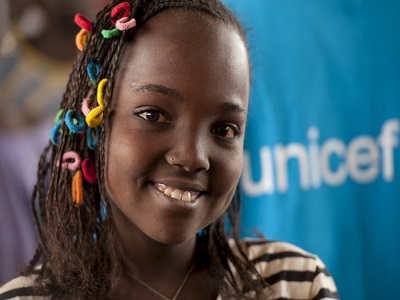

Cover image: © UNICEF/UN019109/Rich
Welcome to the Fundamentals of Humanitarian Action Learning Programme. This programme aims to help you learn about the key principles, frameworks and approaches guiding UNICEF’s humanitarian action, with a specific focus on how UNICEF prepares for and responds to humanitarian emergencies.
Learning objectives
After completing this programme you will be able to:
- describe how UNICEF’s work in humanitarian action relates to its mandate and other key guiding documents
- summarise the main principles, legal frameworks and global standards guiding UNICEF’s humanitarian action in preparing and responding to an emergency
- relate the way UNICEF works in emergencies to the international humanitarian system for supporting coordination and humanitarian action
- explain how UNICEF determines how it responds to an emergency and what it is required to do in the response in support of national authorities
- describe how UNICEF strengthens Country Office preparedness for emergency response
Prerequisite learning
You should make sure you have completed the “Core Commitments for Children (CCCs)” e-learning course (on Agora) before starting this programme.
That course takes about 2 hours to complete.
Who is this programme aimed at?
This programme is aimed primarily at people working for UNICEF who have limited experience of working in emergencies and standby partners who will be deployed to emergencies by UNICEF.
However, it is relevant to all staff as it provides an update and refresher about the fundamental issues, principles and frameworks that guide the way UNICEF responds to and prepares for emergencies.
This programme is designed to be a pre-requisite for staff who will be taking part in regional or country-level humanitarian action, emergency response and preparedness workshops, exercises or learning events. It will give you a good understanding of key topics covered in these activities, and also asks you to reflect on your own experiences, discuss issues with colleagues, and identify questions and challenges that you would like to think about during the workshop or learning exercise.
What does the programme contain?
The programme contains five modules. Each module contains a blend of workbooks introducing the subject, questions to reflect on your experiences and those of others, suggestions for further detailed study or reference, useful videos and guides to help you study these critically, and online quizzes you can use to assess what you have learnt.
Module 1: What is humanitarian action?
This module introduces UNICEF’s work in humanitarian action, specifically in preparedness and response, and how this relates to its mandate and other key guiding documents.
Module 2: Principles guiding humanitarian action
This module introduces the core humanitarian principles, global humanitarian standards and legal frameworks guiding UNICEF’s humanitarian action when it prepares and responds to an emergency. It shows how UNICEF and its mandate relate to these, with a primary focus on humanitarian principles.
Module 3: The humanitarian system and coordination
This module explains the international humanitarian system and coordination mechanisms that are established for humanitarian action and UNICEF’s role within it to fulfil its mandate.
Module 4: Responding to an emergency
This module explains how UNICEF makes the decision to respond to an emergency and an overview of what it is required to do in the response.
Module 5: Strengthening preparedness for emergency response
This module outlines how UNICEF strengthens Country Office preparedness for responding to emergencies, specifically in relation to its procedure and guidance on preparedness for emergency response.
It will probably take you about 60 to 90 minutes to work through the essentials of each module, but you may need longer if you decide to spend more time on the recommended learning activities, studying the various reference guides, webinars and videos in more detail.
How to complete the programme
The modules have been designed so that there is a logical flow through them to help your learning, but how you actually work through it is flexible. So, as a guide, if you have:
- limited knowledge or experience of humanitarian preparedness and response, work through each module in turn
- some experience:
- study Modules 1, 2 and 3 if you need some refresher or as part of pre-requisite learning for emergency preparedness and response workshops and training
- study Module 4 for the key elements of how UNICEF responds to an emergency
- study Module 5 to find about what UNICEF offices must do to strengthen their preparedness for an emergency response.
Modules 4 and 5 are closely linked so it is suggested that it useful to do them one after another.