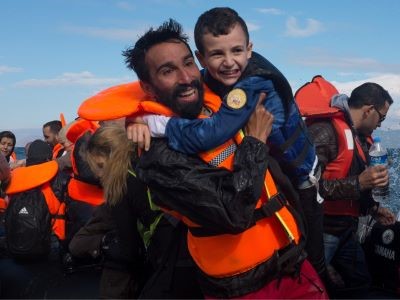

Cover image: © UNICEF/UNI197517/Gilbertson VII Photo
The E-Learning Course on Counter Trafficking (CT) in Humanitarian Settings equips learners with comprehensive knowledge and practical skills to address human trafficking in crisis contexts.
Spanning 15 modules, the course covers critical areas such as the UN Protocol defining Trafficking in Persons (TiP), mechanisms of trafficking, and tailored CT approaches for humanitarian settings. It explores roles and responsibilities of humanitarian personnel, integration of CT activities within cluster coordination, and specialized content for protection staff and data collectors. Additional focus areas include child trafficking, multi-sectoral approaches, referral pathways, mental health and psychosocial support for victims, and the media’s role in CT.
Designed for humanitarian professionals, the course combines theoretical insights with practical tools, including data collection and research methods, to foster effective responses to trafficking challenges.
Learning objectives
- Understand Key Concepts: Explain the UN Protocol on Trafficking in Persons (TiP) and the mechanisms of human trafficking, with a focus on humanitarian settings.
- Apply Counter-Trafficking Approaches: Identify and implement standard and context-specific counter-trafficking (CT) strategies tailored to humanitarian crises.
- Clarify Roles and Responsibilities: Define the roles and responsibilities of humanitarian personnel in preventing and responding to trafficking.
- Integrate CT in Coordination: Demonstrate how to incorporate CT activities into humanitarian coordination mechanisms, including cluster responses.
- Specialize in Protection and Child Trafficking: Develop specialized knowledge for protection personnel and address child trafficking in humanitarian contexts.
- Utilize Data Effectively: Equip learners with skills to collect, analyze, and use human trafficking data and research ethically and effectively.
- Adopt Multi-Sectoral Strategies: Foster the ability to design and implement multi-sectoral approaches to counter trafficking.
- Support Victims: Understand and apply referral pathways and provide mental health and psychosocial support to victims of trafficking.
Audience
This E-Learning Course on Counter Trafficking (CT) in Humanitarian Settings is designed for:
- Humanitarian Personnel: UNICEF staff involved in humanitarian response who seek to address trafficking in crisis contexts.
- Child Protection Officers: Practitioners dedicated to preventing and responding to child trafficking in emergencies.
- Data Collectors and Researchers: Individuals responsible for gathering, analyzing, or utilizing human trafficking data in humanitarian operations.
- Program Managers: Leaders integrating CT strategies into humanitarian coordination, including cluster systems.
- Mental Health and Psychosocial Support (MHPSS) Providers: Professionals offering care to trafficking victims in humanitarian environments.
- Communications Staff: Individuals leveraging media to raise awareness and support CT efforts in crisis settings.
Length
Each module has a duration of 15 minutes. It should take you about 3-4 hours to complete this self-paced course.
The minimum requirement to get the course certificate is the completion of 8 modules out of the 15 total that make up the course.
Structure
The E-Learning Course about Counter Trafficking (CT) in Humanitarian includes 15 modules:
- The UN Protocol that defines Trafficking in Persons (TiP)
- How trafficking occurs
- Human trafficking in Humanitarian Settings
- Responding to the challenge - Standard CT approach
- Responding to the challenge - CT approach in humanitarian settings
- CT roles and responsibilities of humanitarian personnel
- Integrating CT activities in the humanitarian coordination (cluster) response
- Specific content for protection personnel in humanitarian settings
- Human trafficking data and research
- Specific content on child trafficking in humanitarian settings
- Specific content for humanitarian personnel who will use data collection tools
- Adopting a Multi-Sectoral Approach
- Referral Pathways for Victims of Trafficking
- Mental Health and Psychosocial Support to Victims of Trafficking
- The Role of Media in CT in Humanitarian Settings
Contact details
Content issues and questions: Daniela Knoppik dknoppik@unicef.org
Course and learner management: Khaled Khaled kkhaled@unicef.org