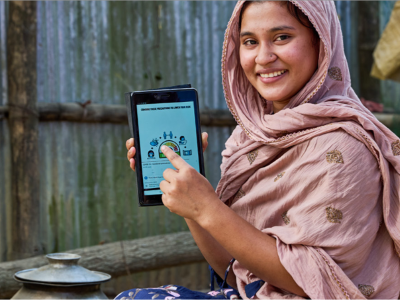

Cover image: © UNICEF/UN
Health campaigns face increasing pressure to reach target populations quickly and effectively but, without timely data, gaps go unnoticed. This self-paced course is designed to strengthen your ability to plan, implement, and sustain Real-Time Monitoring (RTM) approaches for health campaigns. Through real-world scenarios, practical activities, and lessons learned from countries, you’ll explore how RTM helps track campaign performance, identify gaps in coverage, and take timely action.
The course covers essential RTM concepts and tools, guiding you to integrate real-time data collection, analysis, and use into campaign operations. By leveraging digital technologies and strengthening decision-making processes, participants will learn how to maximize health impact, improve service delivery, and contribute to more resilient and data-driven health systems.
Learning objectives
This course is designed to help you understand the value of Real-Time Monitoring (RTM) and how it can be leveraged through digital tools to improve the planning, delivery, and effectiveness of health campaigns.
By the end of this course, you will be able to:
- maximize health program impact by understanding how RTM supports timely and targeted decision-making.
- foster data-driven decision-making by collecting, analyzing, and using real-time data during campaigns.
- promote sustainable health systems by aligning RTM with national digital infrastructure and long-term strategies.
Audience
This course is for professionals engaged in health campaign planning, implementation, and monitoring, including:
- health program managers and supervisors
- health information officers and data managers
- policymakers and decision-makers
- technical partners and implementing agencies
- epidemiologists and surveillance staff
- anyone supporting digitization of health campaigns.
Length
It should take you about 6 hours to complete this self-paced course.
Methodology
This is a self-paced eLearning course.
Structure
This course includes six interactive sessions that walk you through what it takes to implement Real-Time Monitoring:
- Why Real-Time Monitoring?
- What does it take: Shared vision, and decision-making processes
- What does it take: Digitalisation
- What does it take: Enabling environment
- What does it take: Considerations for planning and budgeting
- What does it take: Monitoring and evaluation
Contact details
Content issues and questions: Cristina Lussiana, clussiana@unicef.org
Course and learner management: Naina Ahuja, nahuja@unicef.orgMaterials for Instructor-Led Training
If you'd like to organize an in-person training on using real-time Using Real-Time Monitoring to Strengthen Health Campaigns, you can find pre-built materials for each module at this link.
Using Real-Time Monitoring to Strengthen Health Campaigns: Materials for Instructor-Led Training
All the materials are organized per module. For each one of the 6 modules you can download:
Document Name |
Type |
Purpose |
|
Facilitator Guide |
Facilitator document |
Supports session delivery and highlights key discussion points |
|
Participant Guide |
Learner document |
Provides learning support, activity references, and space for note-taking |
|
Slide Deck |
Visual aid |
Includes core concepts to be presented during the session |