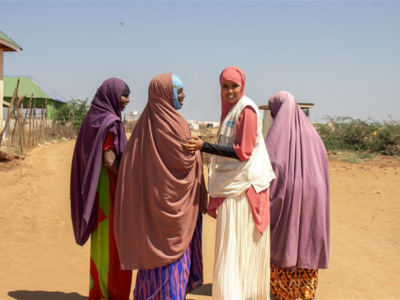

Cover image: © UNICEF/UN
Overview:
Humanitarian work in emergency contexts is demanding and can impact staff wellbeing at every stage—from preparing to work in an emergencies, to working in high-stress environments, to returning and transitioning between duty stations. This comprehensive page brings together modules that will help you to Prepare Well, Stay Well, and Transition Well, providing practical tools and reflective exercises that support mental health and wellbeing.
Whether you are about to work in an emergency, in the middle of an emergency response, or transitioning back to non-emergency or home duty stations, this course is designed to help you strengthen resilience, safeguard your wellbeing, and navigate the challenges of humanitarian work with greater awareness and balance.
Learning objectives
At the end of this course you will be able to:
- Reflect on whether working in an emergency is right for you.
- Understand the impacts of working in emergencies on mental health and wellbeing.
- Apply practical self-care and resilience-building strategies.
- Recognize stressors and early signs of burnout in yourself and others.
- Develop a personal self-care action plan.
- Foster team wellbeing by accessing resources and promoting supportive practices.
- Manage the emotional and psychological impacts of transitions between duty stations.
Audience
- UNICEF staff preparing, working, or transitioning to emergency environments.
Length
It should take you about 1 hour per module to complete the several learning offers.
Methodology
Interactive resources and tools
Structure
This course is composed of 3 modules:
1. Preparing Well – For staff about to work in emergencies.
2. Staying Well (coming soon)– For staff currently working in emergency environments.
3. Transitioning Well – For staff transitioning between emergency, non-emergency, and home duty station
Contact details
Content issues and questions: agradl@unicef.org & eboshoff@unicef.org
Course and learner management: agradl@unicef.org & eboshoff@unicef.org